

When people picture Goa, they usually imagine sun-kissed beaches, bustling shacks, and lively winter crowds. But what happens when heavy downpours hit? For seasonal tourists, summer and winter are the undisputed peak times to visit. However, for astute buyers looking to buy property in Goa with genuine real estate insights, the picture changes completely when the monsoon clouds roll in across the Western Ghats. It reveals a crucial side of the coastal state that fair weather buyers never see. Inspecting Goa real estate during the monsoon allows buyers to spot hidden structural, assess actual year-round livability and make safer, more informed investments.
While others wait, smart investors ask: What is the true condition of a property under stress?
Is investing in Goa real estate a gamble, or a smart opportunity?
From stress-testing structural integrity to evaluating long term rental potentials, inspecting houses in Goa and apartments in Goa during the monsoons offers advantages that dry-season site visits simply cannot match.
Here is why intelligent buyers use the rainy months to conduct real-world property appraisals and secure long-term value.
Why Is Inspecting Property in Goa During Monsoons The Ultimate Construction Stress Test?
During sunny months, almost every villa or luxury apartment in Goa looks picture-perfect. Fresh coats of paint and dry conditions can easily mask underlying structural shortcomings. Performing a thorough property inspection in Goa monsoons acts as nature’s ultimate stress test for construction quality.
Continuous downpours immediately expose critical building defects that might otherwise take years to surface:
Waterproofing and Seepage: Torrential rains quickly reveal hidden roof leaks, wall dampness, and poor waterproofing around window frames or balcony seals.
Drainage and Waterlogging: Heavy rainfall tests the site’s natural layout and local drainage systems, showing you whether rainwater pools near the foundation or drain away efficiently. Ignoring poor drainage can lead to high long-term maintenance costs and erode the property’s overall investment value.
Structural Durability: High humidity and coastal winds test external plaster work, paint resilience, and roofing tiles under extreme weather conditions.
Conducting a site’s assessment during the rains allows you to evaluate the true build quality before signing the dotted line. Always verify that project details and builder credentials are fully registered on the official Goa RERA portal, before making any purchase.
Unfiltered Assessment of Houses in Goa Under Extreme Weather: A luxury home in Goa is only as good as the infrastructure supporting it.
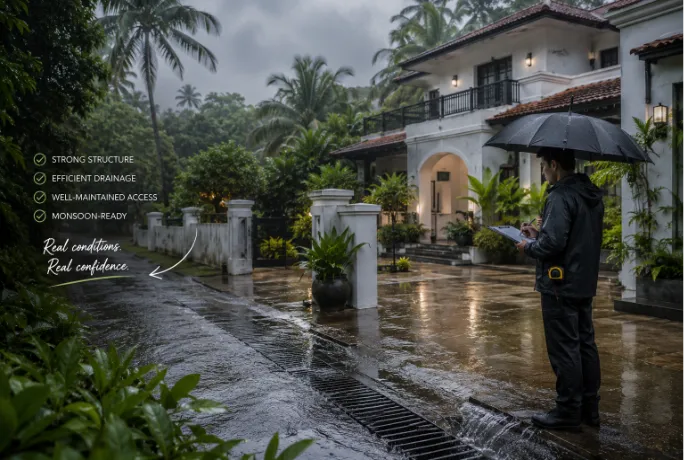
Conducting a property evaluation during the rainy season provides an accurate, unfiltered look at the surrounding neighbourhood:
Road Accessibility: You can assess the condition of local village roads, main highways, and private driveways under heavy weather conditions.
Utility Reliability: Monsoon storms test power grid stability and backup generator systems, allowing you to evaluate whether a residential community maintains uninterrupted power and water supply.
Weather Resistance: You get to see how nearby rivers, backwaters, or hill slopes behave during peak monsoon discharge, giving you peace of mind about future flood and slope risks.
Why is buying property during the rainy season a smart investment move?
Because general foot traffic drops during the rainy months, seller dynamics shift significantly in favor of serious investors. Many buyers prefer to wait, leading to a temporary lull in overall market transaction volume.
Buying property in Goa rainy season creates a prime window for financial negotiation:
Motivated Sellers and Developers: Property owners and real estate developers with active inventory are often more eager to close deals during quiet periods, making them open to flexible payment schedules, waived fees, or direct price reductions.
(Source: https://housing.com/news/when-to-lower-price-when-selling-property/)
Fewer Competing Bids: Reduced buyer competition means you can take your time evaluating property appraisals without fear of being outbid in a market frenzy.
By making the most off-season deals, investors can secure premium property in Goa, from coast villas to city centre residences in Panjim at price points that are difficult to achieve during peak tourist months.
What Makes Property in Goa a Top Choice for Year-Round Rental Income?
Goa transforms into a lush, green paradise during the monsoons. The countryside turns vibrant green, waterfalls come alive, and the atmosphere becomes calm and peaceful. For investors interested in the holiday rental market, this weather shift represents a unique chance to assess a property in Goa.
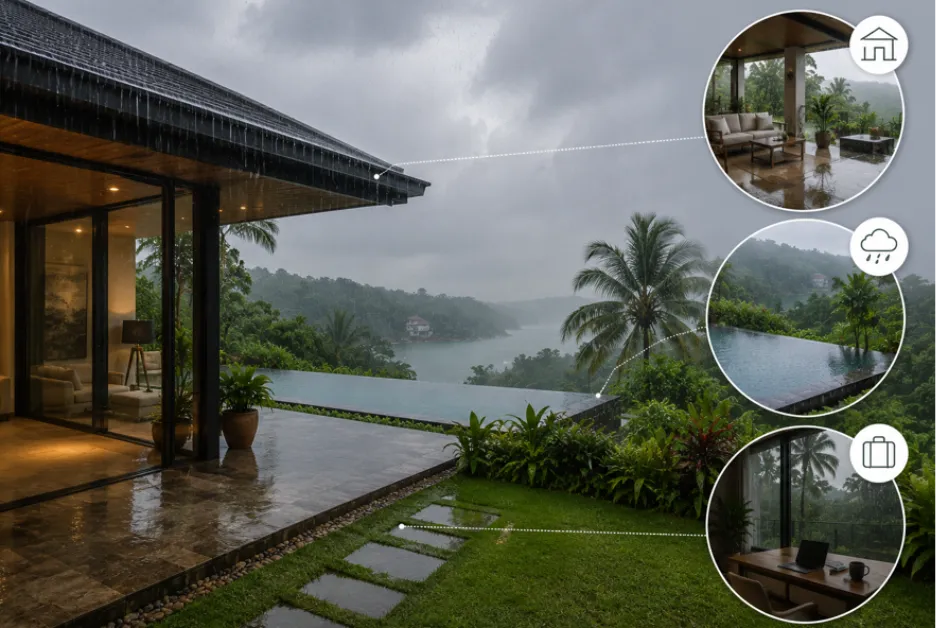
Viewing a property in the rain allows you to assess its year-round rental appeal:
Indoor-Outdoor Flow: You can evaluate how well covered verandahs, covered patios, and glass facades perform during downpours, ensuring the home remains comfortable in all seasons.
Landscape Durability: You get a realistic view of how gardens, infinity pools, and outdoor dining areas handle natural rainfall and drainage.
Monsoon Retreat Demand: Discerning high-net-worth, travellers increasingly seek “monsoon retreats” in North and South Goa for long-term remote work or quiet getaways. Experiencing the property during this period helps you craft compelling marketing strategies for off-season tenant appeal. (Source: https://www.cntraveller.in/story/the-best-time-to-visit-goa/)
What Should You Check During a Monsoon Property Inspection?
To make the most of your monsoon real estate evaluation, keep this quick checklist in mind during site visits.
| Inspect Interior Surfaces | Check ceilings, internal wall joints, and window casings for moisture spots, peeling paint or damp odours. |
| Examine Outdoor Drainage | Verify that gutters, downpours, and site drains carry water away from main structures efficiently. |
| Test Backup Systems | Confirm that power back-up setups, solar systems, and water pumps operate smoothly during weather disruptions. |
| Evaluate Access Routes | Drive the full route from the nearest road to the property entrance during or immediately after heavy rain. |
Capitalising on Goa’s Seasonal Advantage
While casual buyers wait for the winter sun, forward-thinking investors know that the monsoon is when houses in Goa reveal its true value. Inspecting properties in the rainy season combines rigorous quality verification with favourable negotiation leverage.
This is especially true in thriving urban centers like Panjim, where urban connectivity, proximity to civic hubs, and proper road maintenance are essential year-round. Premium developments in Panjim, such as Skyline Harmony in Panjim by Satt Adhar, demonstrate top-tier planning, robust waterproofing, and 24/7 backup systems keep homes protected and comfortable even during peak downpour.

By treating the monsoon season as an essential appraisal window, you ensure that your real estate investment in Goa isn’t just a fair-weather attraction, but a durable, resilient, and highly profitable asset for years to come.
Why Investors Inspect Property in Goa During Monsoon?
| Appraisal Factor | Fair- Weather Inspection | Monsoon Inspection Advantage |
| Waterproofing and seepage | Hidden behind dry paint or fresh touch-ups | Directly exposes roof leaks, wall dampnes and sealant failures |
| Drainage and Waterlogging | Layout appears clean and dry | Demonstrates whether site and street stormwater systems clear rain efficiently |
| Bargaining Leverage | High buyer competition drives up prices | Off-season market lull yields better pricing and flexible payment terms |
| Structural Integrity | Weather resistance cannot be tested | Tests roofing, plaster work and exterior concrete under high winds and downpours |
FAQs
1. Is monsoon the best time to buy property in Goa?
Yes, purchasing or inspecting property in Goa during the monsoons is considered one of the smartest strategies for serious buyers. The heavy rains expose structural issues, such as roof seepage, dampness, and poor drainage – that are hidden during dry months. Additionally, lower foot traffic gives buyers higher negotiation power with developers and sellers.
2. What needs to be checked during a property inspection in Goa monsoon?
During a monsoon property inspection, focus on four key areas: Waterproofing & Seepage: Inspect interior ceilings, wall joints, and window seals for moisture spots or mold.
Drainage: Ensure rainwater flows away from the building foundation and that approach roads do not get waterlogged.
Utility Backups: Verify that power backup, generators, and water supply systems remain uninterrupted during heavy downpours.
Roof & Exterior Integrity: Check plaster work, gutter capacity, and roofing tiles under continuous rain.
3. Can non-Goans and NRIs buy houses or apartments in Goa?
Yes. Any Indian citizen can legally purchase residential properties, including houses in Goa and apartments in Goa, without local domicile restrictions. NRIs and OCIs can also purchase residential and commercial real estate through standard banking channels (NRE/NRO accounts) under FEMA guidelines. Note that restrictions apply to agricultural or forest land for non-agriculturists.
4. How long does a thorough property inspection take during the monsoon?
A complete monsoon property inspection typically takes about 1 to 2 hours. This provides sufficient time to check interior walls, ceilings, balcony drains, power backup systems, and the estate’s external drainage pathways.
5. Does buying a property during monsoon require special ongoing maintenance?
No special extra maintenance is required beyond standard coastal upkeep. However, conducting a monsoon inspection ensures that proper waterproofing and exterior protective coats are already in place before you take possession, saving you money on future repairs.